
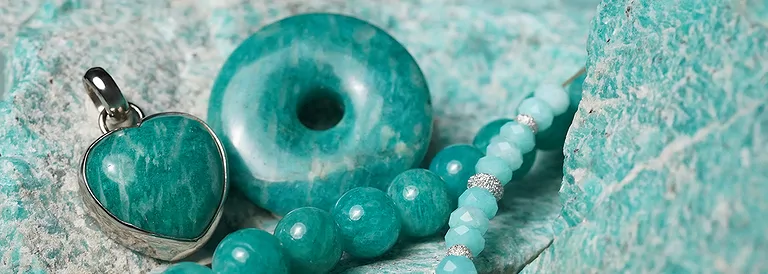
Amazonite – Stone of the Month for August 2026
August is the month of ripeness. Nature proudly displays its harvest and invites us to savor its abundance. It is a time for rest and enjoyment, for pausing and reflection, but also for celebration and shared experiences. August gives us the opportunity to enjoy the beauty of life and summer in all its splendor before autumn begins.
During this time, the balancing Amazonite helps us harmonize our intellect and intuition, enabling us to solve problems constructively. It strengthens our confidence in our knowledge and abilities, allowing us to clearly recognize contradictions and conflicts and then resolve them. Amazonite makes it easier to take control of our lives, and contradictions and conflicts are mitigated through improved intuition. In this way, a passive, accepting attitude can be overcome.
Tumbled Stones, donuts, strands, and more made of Amazonite for resellers
Mineralogical Profile of Amazonite
Formula: K(AlSi₃O₈)
Category: framework silicate, feldspar family
Formation: Forms magmatically in pegmatites; is also found in crystalline schists as a result of the metamorphism of such pegmatites.
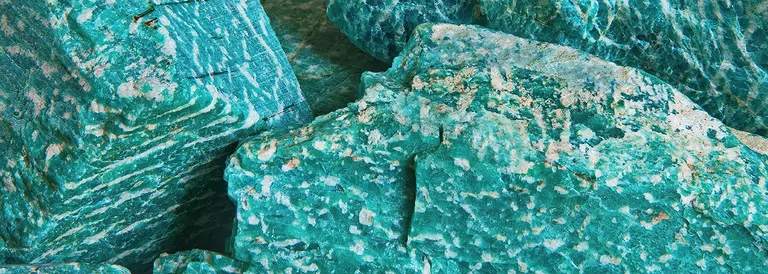
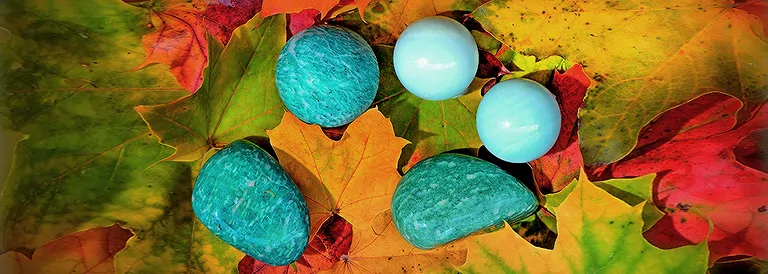
Color: green, bluish-green, turquoise; see below for details
Luster: pearly, vitreous
Cristal system: triclinic
Mohs hardness: 6 to 6.5
Cleavability: perfect cleavability, uneven Fracture
Crystal habit: columnar, also thick tabular crystals; frequent twinning; crystals from fissures often with many faces; otherwise as coarse, sometimes quite large cleavage fragments in late-stage and granular aggregates
Localities, main source countries: China, Brazil (in the pegmatites of Minas Gerais), Peru, India, Namibia, Madagascar, Russia (vivid green stones from the Kola Peninsula; unfortunately now very difficult to obtain), the U.S. (Morefield Mine in Amelia County, Virginia, as well as famous localities in Colorado).
Availability: The number of mining sites is small and cannot be compared to that of other gemstones. In most cases, access to these sites is also very limited.
Uses: Sold commercially as a gemstone; Amazonite was used as a gemstone as early as the Neolithic period and in ancient Egypt
Wholesale Amazonite for Your Store
Origin of the Name “Amazonite” and Synonyms
The origin of the name “Amazonite” is not entirely clear. There are two possible explanations: The name could be derived either from the Amazon River or from the legendary Amazons.
As early as in Ancient Egypt, Amazonite was crafted into jewelry and amulets. Later, scientists linked the name to the Amazon River—although no localities for Amazonite are known to exist there to this day.
The explorer Alexander von Humboldt (1769–1859) reported on an indigenous people along the Rio Negro who wore green amulets. According to tradition, these were said to originate from a land where women lived without men—the land of the Amazons.
However, the green stone that Humboldt brought back from South America was not Amazonite, but Nephrite. Nevertheless, various green stones were later referred to as “Amazon stone,” “Amazonite,” or “Amazonite.”

Today, Amazonite is understood to be a green to blue-green variety of the feldspar mineral microcline. Its characteristic color is caused by small amounts of lead in the crystal lattice.
Common synonyms for Amazonite include Amazon stone, Amazonite, and Crimean spar. In mineralogical databases, Amazonite is also listed as green Feldspar or blue-green microcline.
Discover Amazonite for Resellers
The trade names “Amazonas jade” and “Colorado jade” are misleading and mineralogically incorrect, as Amazonite is not a type of jade.
Historical Uses of Amazonite
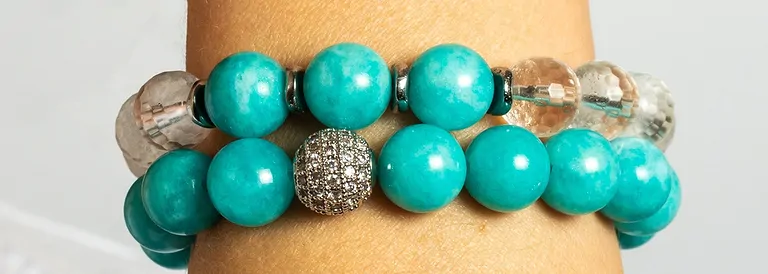
Amazonite is one of the gemstones that has been used and valued by humans for a very long time. As early as the Neolithic period, Amazonite was crafted into beads, small jewelry pieces, and decorative objects. Its striking greenish to blue-green color made it a popular stone for jewelry and symbolic objects from an early stage.
Amazonite Products in the B2B Store
Amazonite played a special role in Ancient Egypt. In Wadi Sikait and other regions of the Eastern Desert, Amazonite was mined over 5,000 years ago and used as a gemstone, Amulete Stone, and decorative material. Amazonite was used to make beads, pendants, inlays, and intricate marquetry. Amulets made of Amazonite were considered valuable protective and decorative objects. Amazonite was also incorporated into the famous death mask of Pharaoh Tutankhamun—along with other materials such as lapis lazuli, carnelian, and Turquoise.
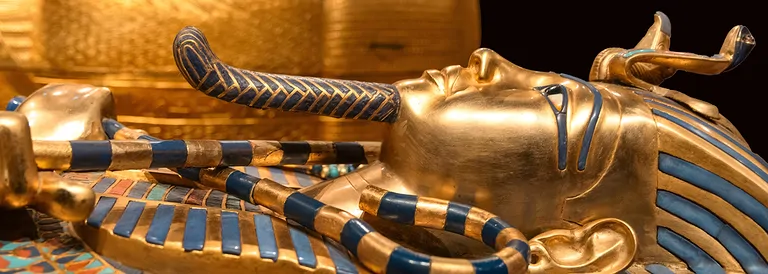
Amazonite was also prized outside of Egypt. Beads and jewelry made of Amazonite have been found in royal tombs in Mesopotamia. Amazonite is also known from pre-Columbian jewelry and ritual objects of the Tumaco-Tolita culture (ca. 300–500 CE) in Central and South America.
These findings show that the stone played an important role in various cultures, not only because of its beauty but presumably also because of its symbolic significance.
The Color of Amazonite - Formation and Color Variations
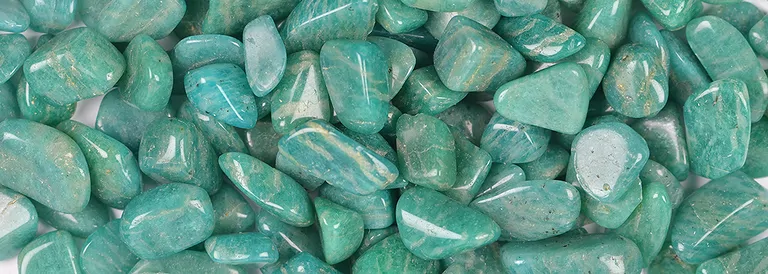
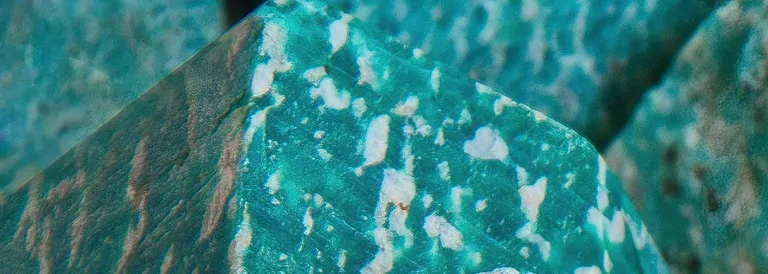
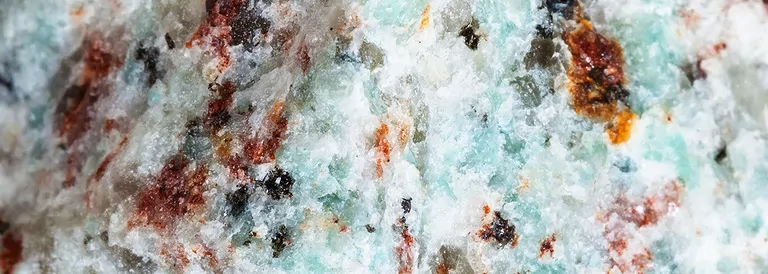
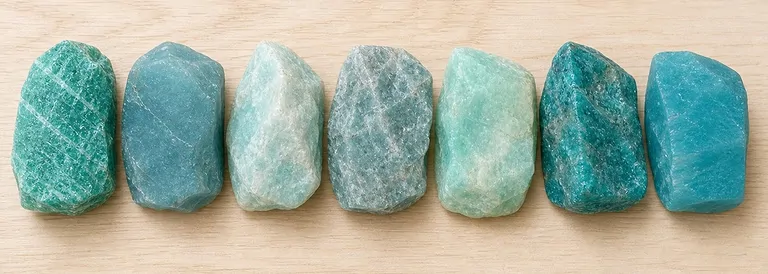
Amazonite is one of the most visually appealing gemstones in the feldspar group. Its color palette ranges from delicate blue-green to vibrant Turquoise to intense grass green. Some specimens have a nearly monochromatic surface, while others feature the light white stripes and veins typical of Amazonite that run through the stone. These are caused by fine segregation of different Feldspars and are known as perthite veins.
The classic Amazonites from Russia are particularly well-known; their vivid blue-green color and distinctive white Perthite strands have been regarded as a mark of quality for many decades. Depending on the locality, however, Amazonites can vary significantly in appearance—from uniformly colored stones to heavily patterned specimens.
Where does the color of Amazonite come from?
The cause of its extraordinary color has puzzled mineralogists for many decades. For a long time, it was assumed that Copper was responsible for the green to blue-green coloration. However, this assumption is now considered disproved.
According to current research, the formation of the color results from a complex interplay of several factors. Lead plays the most important role, as it is incorporated in small amounts into the crystal lattice of microcline. Water molecules within the crystal, as well as natural radioactive cosmic radiation acting over geological time scales, also contribute to the development of color.
Explore Wholesale Amazonite Collection
Recent scientific studies also show that other trace elements, such as rubidium, thallium, and possibly divalent iron (Fe²⁺), can influence the hue and intensity of the color. The characteristic color of Amazonite is therefore not attributable to a single substance, but rather results from the formation of several chemical and physical processes.
Color Variation in Amazonite
Depending on its chemical composition and origin, the color of Amazonite varies considerably. The spectrum ranges from:
- pale mint and blue-green,
- intense turquoise,
- vibrant blue-green,
- to rich grass green.
Stones with a strong, uniform turquoise or blue-green color and a beautiful contrast to the white perthite veins are particularly sought after. Since the chemical conditions during the formation of each crystal vary, every Amazonite has its own unique coloration and pattern—making each piece a one-of-a-kind creation of nature.

Amazonite as a Gemstone – Cutting and Care
Amazonite is a popular gemstone, but it presents some challenges for gem cutters. With a Mohs hardness of 6 to 6.5, it is hard enough for everyday use, but—like all Feldspars - it has a distinct cleavability. As a result, the stone can fracture along natural cleavage planes if subjected to strong impacts or improper processing.
Amazonite Jewelry at Wholesale Prices
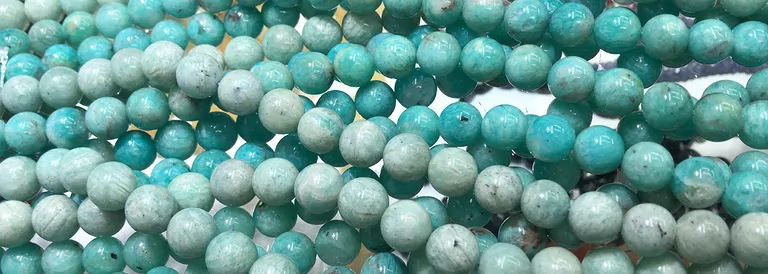
For this reason, cutting and polishing require a great deal of experience. Careful work is especially necessary with delicate designs or thin pendants to prevent chipping. High-quality Amazonite is therefore often crafted into cabochons, beads, or more substantial pendants, which best showcase the stone’s natural beauty.
Amazonite captivates with its unique blue-green hues and natural veining. To ensure that amazonite jewelry retains its beauty for many years, gentle care is recommended. Unlike many other gemstones, amazonite is sensitive to chemicals and extreme temperature fluctuations.
Can Amazonite jewelry be placed in a silver cleaning bath?
No! Jewelry featuring a set Amazonite should not be placed in a silver cleaning solution. The cleaning chemicals it contains can corrode the gemstone’s surface, dull its natural luster, or - in the worst case - cause discoloration.
If only the silver has tarnished, it should instead be carefully cleaned with a special silver-polishing cloth. This polishes only the metal while protecting the Amazonite.
The Proper Way to Clean Amazonite
For cleaning, the following is usually sufficient:
- lukewarm water
- a mild soap solution
- a soft cloth or a very soft brush
Afterward, the jewelry should be thoroughly rinsed with clean water and dried carefully right away.

What Amazonite Cannot Tolerate
To ensure the gemstone retains its natural color for a long time, it should be protected from the following:
- Silver dip baths and harsh silver cleaners
- Acids and strong cleaning agents
- Perfume, hairspray, and cosmetics
- Chlorinated or saltwater
- Intense heat and rapid temperature changes
- Prolonged direct exposure to sunlight, which can cause the color to fade over time
Amazonite Products for Retailers
Storing Jewelry Properly
Amazonite has a Mohs hardness of about 6 to 6.5. While this makes it suitable for everyday wear, it can be scratched by harder gemstones such as quartz, topaz, or Diamond. Therefore, Amazonite jewelry should be stored individually, if possible, in a jewelry pouch or a softly lined jewelry box.
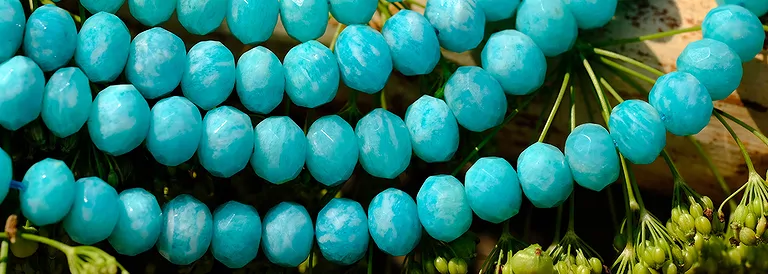
Uses of Amazonite in Technology and Industry
Amazonite plays only a minor role in technology and industry. Due to its attractive color and comparatively high value, it is used almost exclusively as a gemstone for jewelry and decoration.
One exception is amazonite granite, a natural stone containing amazonite-bearing Feldspar from Chittor (Rajasthan). Particularly well-known is the Indian Amazonite granite “Monsun,” which is used in high-end interior design for wall cladding, flooring, countertops, or exclusive furniture surfaces.
Discover Amazonite at Wholesale Prices
Amazonite, however, is hardly suitable for technical applications. Although it belongs mineralogically to the feldspar group—whose members are important raw materials for the Glass, ceramics, and porcelain industries— However, due to its rarity, decorative quality, and higher market value, Amazonite itself is too economically valuable to be used as an industrial mineral.
Use of Amazonite in Crystal Healing
In crystal healing, Amazonite is considered a stone of harmony and balance. Its focus is on calmness and relaxation; it balances energetic fluctuations and helps release inner blockages. In this way, it promotes a positive outlook and strengthens confidence in one’s own abilities.
Amazonite supports intuition and brings the mind and emotions, the head and the heart, into harmony. It helps one better recognize and resolve contradictions and inner conflicts. At the same time, it strengthens personal responsibility and makes it easier to adopt an active and self-determined attitude.
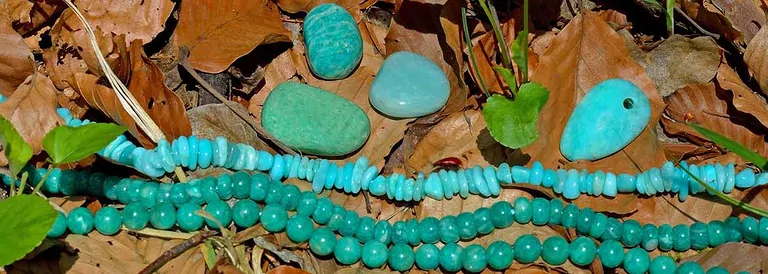
Energetically, Amazonite protects the aura and stabilizes the etheric body. It is particularly effective when worn directly against the body as a pendant, necklace, or bracelet. Amazonite is also popular for meditation and massage treatments. Since massage styluses or beads made of Amazonite are rarely available, larger, smoothly polished Tumbled Stones serve as a good alternative.
Caution: Amazonite as a Water Stone
Amazonite contains small amounts of lead and is therefore only suitable as a Water Stone to a limited extent.
A 2021 study by the Institute for Gemstone Testing (EPI), led by certified mineralogist Bernhard Bruder, showed that under certain conditions, Amazonite can release measurable amounts of lead ions. In the experiment, which simulated the ingestion of a stone or contact with a slightly acidic liquid, the limit values set by the European standard DIN EN 71-3 for lead release were significantly exceeded.
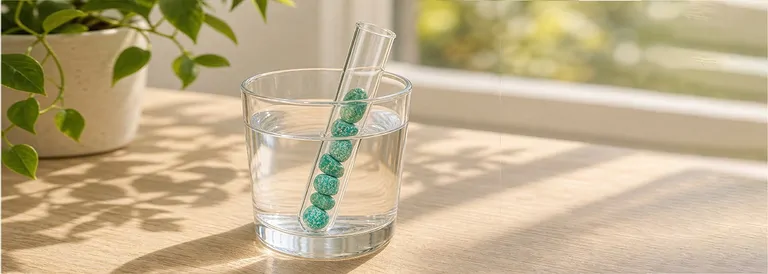
For this reason, we strongly recommend against placing Amazonite directly into drinking water. Anyone wishing to make gemstone water with Amazonite should instead use the test tube method or the indirect infusion method with crystals. In these methods, the stone does not come into direct contact with the water, so there is no risk of lead leaching.
Chakra and Astrological Associations of Amazonite
In crystal healing, Amazonite is primarily associated with the heart chakra. It promotes inner harmony, compassion, and emotional balance. It is also sometimes associated with the throat chakra, as it is said to support the clear and thoughtful expression of one’s thoughts and feelings.
Astrologically, Amazonite is particularly associated with the zodiac signs Cancer and Virgo. It is said to help Cancers find emotional balance, while it can bestow Serenity and confidence in their own intuition upon Virgos.
Amazonite Products for Retailers
In their card set “Stone Beings in the Medicine Wheel” (Neue Erde), Stephan Bergmann and Frank Girulat describe the nature of Amazonite as gentle, friendly, and balancing. The stone helps one consciously address one’s own life issues, take necessary steps with clarity, and express oneself mindfully and thoughtfully.
Its guiding principle is: “With an inner smile, I turn toward my own essence.”
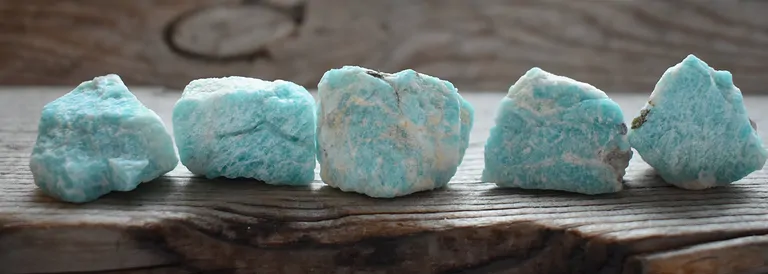
The Formation of Amazonite
Amazonite forms primarily through magmatic processes deep within the Earth and occurs as a green to blue-green variety of the feldspar mineral microcline (potassium feldspar).
Pegmatite Formation
Amazonite forms almost exclusively in granite pegmatites. These are particularly coarse-grained igneous rocks that form from the final, water- and gas-rich residual melts of a slowly cooling magma. These residual melts are rich in elements such as potassium, silicon, and aluminum, as well as rare trace elements that are crucial for the growth of large crystals.
Crystallization
Amazonite forms several kilometers underground under high pressure and during a very slow cooling process. This gives the crystals ample time to grow into large, well-formed specimens. Pegmatites are therefore among the rocks in which some of the largest and most beautiful mineral crystals on Earth form.
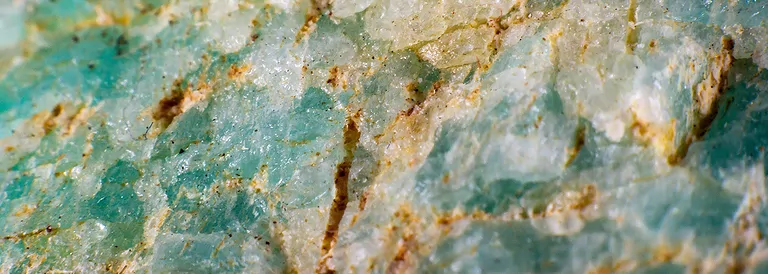
The Formation of the Color
Amazonite acquires its characteristic greenish to intense turquoise-blue color only after the actual crystal formation has taken place. This is due to small amounts of lead, which replace individual potassium atoms in the crystal lattice. Together with traces of water, they influence the mineral’s light absorption and create the conditions for its typical coloration.
For the color to fully develop, a low level of natural radioactivity from the surrounding rock is also required. Over geological time scales, the lead centers are activated by this natural radiation, resulting in the characteristic blue-green color of Amazonite.
Wholesale Amazonite for Resellers
Is Amazonite radioactive?
Although a low level of natural radioactivity is required during its formation to produce its characteristic color, Amazonite is not radioactive when used as a gemstone and can be worn without concern. Caution is advised only when using it as a Water Stone, as Amazonite contains small amounts of lead that can be released under certain conditions.
Associated Minerals
Amazonite is often found alongside quartz, Smoky Quartz, Albite, Orthoclase, topaz, fluorite, tourmaline, Lepidolite, and beryl. These mineral associations are typical of pegmatites and make many specimens particularly attractive to mineral collectors as well.
Since Amazonite forms only under very specific geological conditions, high-quality localities are comparatively rare worldwide. Crystals with particularly intense coloring and a vivid turquoise-green hue are among the most sought-after gemstones in the feldspar group.
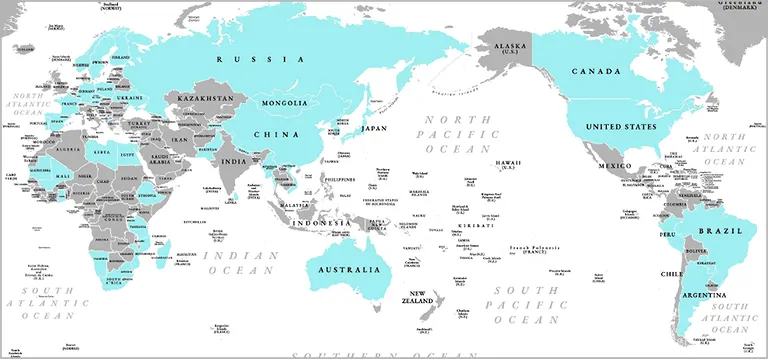
Amazonite Localities Worldwide
Amazonite is found on nearly every continent. Significant localities are located in Brazil, Madagascar, Russia, Namibia, India, China, the U.S., and Mozambique, among other places. In addition, there are numerous other sites, though these are often limited in scope or yield only small quantities of the mineral.
Only a few deposits are suitable for economically viable mining. In many regions, Amazonite is found only as an accessory mineral or is collected in small quantities by hobbyists. High-quality crystals and gemstones therefore come from only a relatively small number of localities. The origin can have a significant impact on the color, structure, and quality of the material. Particularly well-known deposits, such as the Morefield Mine in the United States or the pegmatites of the Ilmen Mountains in Russia, therefore enjoy an excellent reputation among collectors and in the gemstone trade.
Russia – The Classic Amazonite
The most famous Amazonites come from the Ilmen Mountains in the southern Urals. The first high-quality stones from there made their way to Europe as early as the 18th and 19th centuries. They are characterized by their rich blue-green color and the distinctive white perthite veins, which are still considered a mark of quality today.
Xinjiang (China) – Impressively Intense
Amazonite from the Chinese province of Xinjiang (Xing-Jiang) is among the highest-quality amazonites for jewelry and collectors. Due to their vivid turquoise-green color, Chinese Amazonites are compared to high-quality Russian Amazonites, but they often have a more even color distribution and less pronounced white perthite veins. This makes them particularly attractive for jewelry making.
Amazonite for Gem & Mineral Retailers
Madagascar – a modern source region
Madagascar has developed into a major supplier in recent decades. The Amazonites found there are often characterized by a very light turquoise-green color and large rough stones that are easy to cut.
Mozambique – Rich Blue-Green
Mozambique supplies high-quality Amazonite with intense colors and, in some cases, exceptional transparency. They are increasingly being used for exclusive jewelry pieces.
Namibia – Rare Collector’s Specimens
In Namibia, Amazonite is often found alongside Smoky Quartz, Albite, and Fluorite. Collectors particularly appreciate the aesthetically pleasing crystal specimens from these deposits.
Colorado (USA) – The Largest Crystals
The pegmatites around Pikes Peak in Colorado are world-famous. Amazonite crystals with edge lengths exceeding 30 centimeters have been found there. They often grow alongside Smoky Quartz, forming spectacular mineral specimens that fetch top prices at mineral shows.
Brazil – intense colors
Brazil is now one of the most important suppliers of Amazonite for jewelry making. Stones with an intense turquoise-green color and a comparatively uniform hue—particularly from the states of Minas Gerais and Bahia—are ideal for pendants and other jewelry pieces.
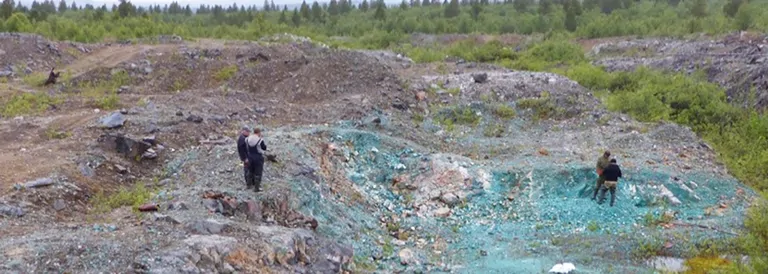
Classic Amazonite from Russia
Although Amazonite is mined in many countries around the world today, Russian Amazonite is still regarded by collectors and connoisseurs as the benchmark for quality. Its vibrant blue-green color and characteristic white perthite veins - formed by the fine segregation of various Feldspars—are particularly prized.
The best-known localities are located in the Keivy Massif on the Kola Peninsula in the Murmansk region of Russia. The deposits are rich in Amazonite and rank among the most significant in the world. This remote area was not systematically explored and developed until the 1930s.
Shop Amazonite for Your Business
Mining remains a major challenge to this day. The localities are located north of the Arctic Circle, where long winters, low temperatures, and a poorly developed infrastructure make transportation difficult. During the winter months, temperatures below −30 °C - and in some cases even as low as −40 °C -are not uncommon. After the snow melts, roads and transportation routes often need to be repaired before the remote deposits can be reached again. The harsh natural environment and limited infrastructure continue to make the mining of Russian Amazonite a logistical challenge to this day.
These difficult conditions contribute to the fact that high-quality Amazonite from the Kola Peninsula remains highly sought after to this day. Its intense color and distinctive white markings make it the classic benchmark for Amazonite from around the world.
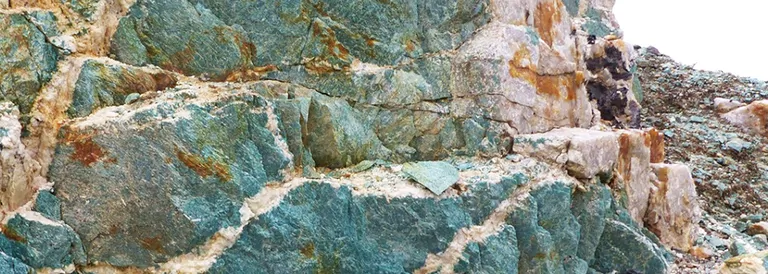
Amazonite from Upper Lusatia, Austria, and France
Amazonite has also been found in Germany, including in the Arnsdorf-Hilbersdorf area near Vierkirchen in the Görlitz district. There, the mineral occurs in pegmatitic rocks alongside other Feldspars, quartz, Smoky Quartz, and mica.
Amazonite from Upper Lusatia is a mineralogical rarity. The localities are small and are not mined commercially for jewelry production. Specimens are therefore of interest primarily to mineral collectors and as regional type specimens. Their special value lies not so much in large quantities or consistent gemstone quality as in their rare German origin.
Discover our wholesale selection of Amazonite
Amazonite also occurs in Austria, though only at a few localities. The best-known localities are located near Pack in Styria and on the Gradischkogel in Carinthia. There, Amazonite crystals occur in granitic pegmatites alongside Rock Crystal, Smoky Quartz, Beryl, Tourmaline, and other minerals. Some of these sites are now protected and are not mined commercially.
There are also amazonite localities in Corsica. They are found primarily in the island’s granite regions, where amazonite occurs in pegmatites alongside quartz and other Feldspars. The sites are small and yield only limited quantities. There is no commercial mining taking place.
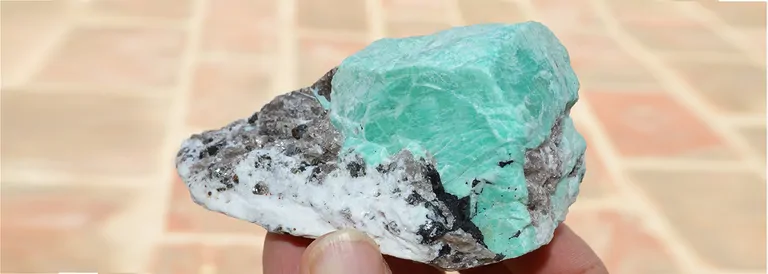
Mineralogical Relatives of Amazonite
Amazonite is not a distinct mineral species, but rather the green to blue-green variety of the mineral microcline. Microcline belongs to the large group of Feldspars, which, at around 60 percent, make up the largest portion of the Earth’s crust.
Microcline and Potassium Feldspars
Amazonite’s closest relatives are the other varieties of microcline. They are designated differently depending on their color:
- Microcline – colorless, white, cream-colored, or pink
- Amazonite – green to blue-green variety of microcline
Microcline, along with Orthoclase and sanidine, belongs to the group of potassium feldspars. These minerals have nearly the same chemical composition but differ in their crystal structure and Formation.
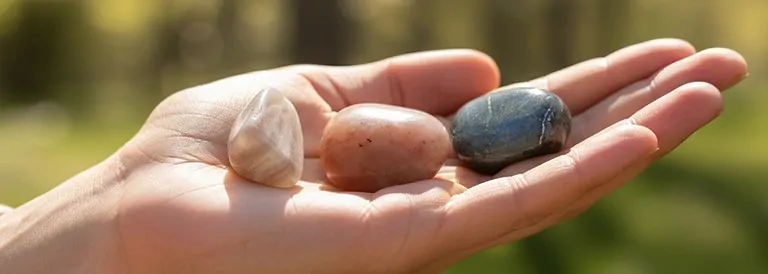
Other Feldspars
The feldspar group also includes the plagioclases, whose chemical composition varies between sodium and calcium. Well-known examples are albite, oligoclase, andesine, labradorite, bytownite, and anorthite.
Labradorite, sunstone, and Moonstone in particular—like Amazonite—are popular gemstones from the feldspar group.
Although these minerals belong to the same mineral group, they differ significantly in color, optical effects, and chemical composition. Among feldspars, Amazonite is particularly distinctive due to its characteristic turquoise- to blue-green color and—at least in the case of Russian amazonite—the frequently occurring white perthite veins.
More information about Feldspar
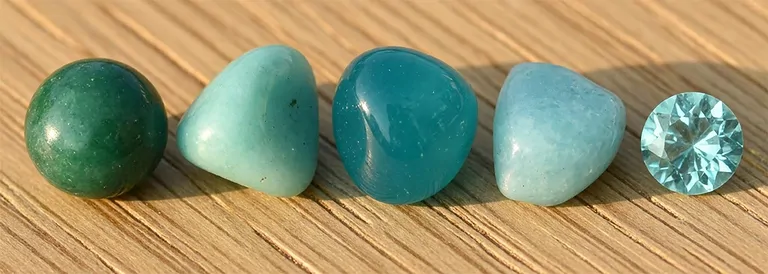
Confusion between Amazonite and Other Minerals and Gemstones
Due to its blue-green to turquoise-green color, Amazonite is often confused with other gemstones. A definitive identification is usually only possible based on its mineralogical properties.
Amazonite and Turquoise
Amazonite is most commonly confused with turquoise. Both stones have similar shades of blue and green. Turquoise, however, is a phosphate mineral and usually exhibits a fine-pored structure as well as frequent dark veins (Bedrock). Amazonite, on the other hand, belongs to the feldspar group and often features the characteristic white perthite veins.
Amazonite and Chrysocolla
Chrysocolla also exhibits intense turquoise-blue to green colors. Unlike Amazonite, Chrysocolla is usually softer, often matte, and frequently displays an irregular, cloudy structure.
Amazonite and Larimar
High-quality Amazonite is occasionally confused with Larimar. However, Larimar usually has a lighter sky-blue color with white, cloud-like patterns and belongs to the pectolite mineral group. Amazonite often appears greener and exhibits the typical feldspar-like patterns.

Amazonite and Jade
The trade names “Amazonas jade” or “Colorado jade” are mineralogically incorrect. Amazonite does not belong to the jade group and consists of neither Jadeite nor Nephrite. Despite similar shades of green, these minerals differ significantly in composition, structure, and properties.
Amazonite and Aventurine
Green aventurine may resemble Amazonite at first glance. However, aventurine is a quartz with fine mica or Fuchsite inclusions that produce a characteristic shimmering effect (aventurescence). Amazonite, on the other hand, does not have this shimmering effect but often features white feldspar veins.
Amazonite and Chrysoprase
Chrysoprase, a green variety of chalcedony, is also occasionally confused with Amazonite. Chrysoprase usually displays a uniform apple-green color and often appears slightly translucent. Amazonite, on the other hand, tends to be bluish-green and frequently has a cloudy or striped pattern.