
Lava - meaning and effect
Mineralogical profile of lava
Chemical formula: Volcanic rock with a high proportion of pyroxenes (magnesium-iron chain silicates) and feldspars (sodium-calcium framework silicates)
Formation: volcanic, basic (silica-poor) effusive rock (basalt lava)
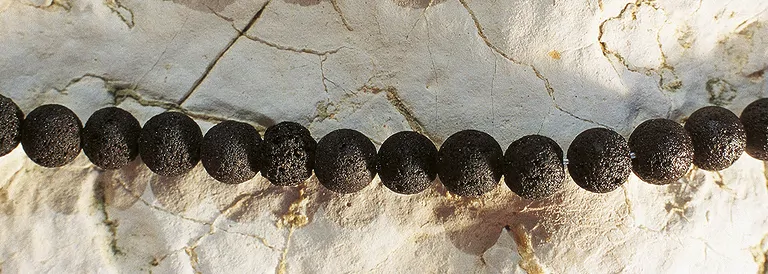
Colour: grey to black in the solid state, sometimes brownish
Crystal system: predominantly monoclinic (pyroxenes) and triclinic (feldspar), admixtures cubic (magnetite) or rhombic (olivine)
Mohs hardness: cannot be determined as fine-grained porous rock
Fissility, fracture: no fissility, earthy to granular fracture
Occurrence, main supplier countries: worldwide
Appearance: irregularly shaped, granular-porous rocks
Use: Lava is a popular decorative stone for indoor fountains, flower arrangements, etc. It was only after the year 2000 that lava began to be used as a jewellery stone for necklaces, necklaces, etc.. This also drew the attention of gemstone healing to this stone, where it is used as a ‘starting aid’ in new phases of life, which are tackled with vigour and dynamism, but at the same time in a considered and level-headed manner. Astrologically, lava is associated with Aries and Scorpio.
Lava as a gemstone
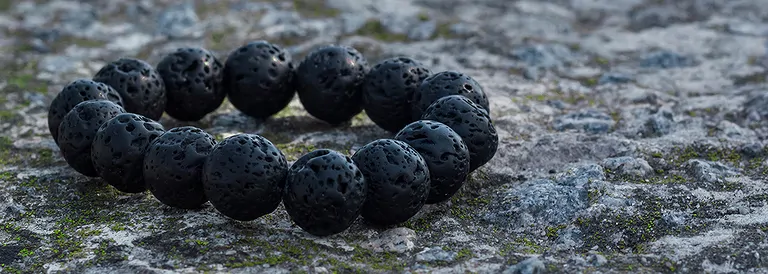
Due to its low density, elements made of lava are very popular in jewellery design, as even large pieces and spheres are very light and comfortable to wear. Lava can be combined with elements made of both silver and gold-plated silver.