Stone of the Month for July 2026: Amethyst—Meaning and Effects
July marks the height of summer, the month when nature unfolds all its power and beauty. July invites us to celebrate life and savor the moment. It is a time for enjoyment, letting go, and experiencing nature in all its abundance. Amid the warmth and light, July reminds us just how precious and rich the present moment can be.
The purple amethyst is a good companion for sorting through the many impressions, experiences, and adventures amid all the exuberance, helping us avoid falling into a frantic pace. It strengthens inner peace and calm while supporting alertness and a sense of justice. Thus, even amid all the Joie de vivre, a sober, focused reflection on what has been achieved so far is not neglected. Plans can be made and arrangements organized in a thoughtful and constructive manner.
Mineralogical Profile: Amethyst
Formula: SiO₂+(Al, Fe, Ca, Mg, Li, Na)
Category: Oxide, Quartz Group
Formation: magmatic in inclusions within basic volcanic rocks, rarely found in fissures and vein systems
Color: violet due to iron and natural radiation
Luster: vitreous
Cristal system: trigonal
For Resellers: Amethyst at wholesale prices
Mohs hardness: 7
Cleavability: no cleavability, conchoidal fracture, brittle
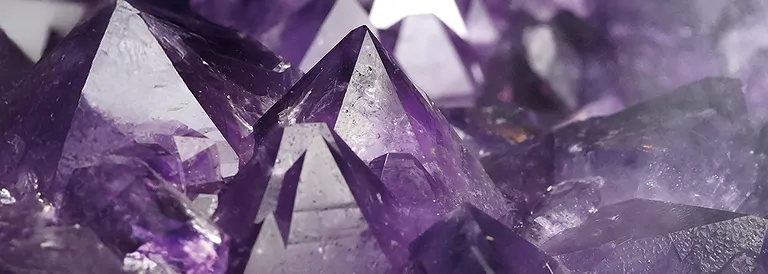
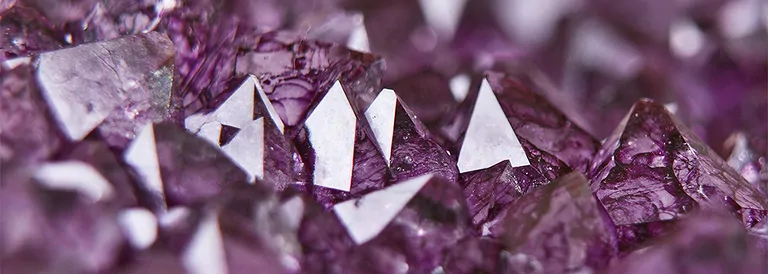
Crystal habit: Six-sided crystals that rarely form prisms. The crystal tips usually rest on tooth-like “roots,” lining entire rock cavities (druses).
Localities, main source countries: Southern Brazil (Rio Grande do Sul—where amethyst druses weighing up to several metric tons have been found), Uruguay, Mexico (very beautiful crystals from Veracruz), Namibia, Zambia, Australia, India
Availability: rare to very good, depending on quality and color
Origin of the Name “Amethyst” and Synonyms
The name “amethyst” is derived from the ancient Greek word ἀμέθυστος (amethystos), which means “counteracting intoxication.” This was linked to the ancient belief that the wearer of an amethyst was protected from the intoxicating effects of wine. It was also believed that wine drunk from an amethyst cup would not cause intoxication.
The formation of this superstition likely occurred as a result of the custom of diluting red wine with water. This gave the drink a reddish-purple, amethyst-like color, while at the same time allowing people to drink larger quantities without getting drunk quickly.
Amethyst at Wholesale Prices: Tumbled Stones, Stringed Beads, and More
Synonyms for amethyst include:
- violet quartz / purple quartz – descriptive names based on the color
- Bishop’s stone – due to its violet color and use in ecclesiastical rings
- Bacchus stone – a reference to Bacchus/Dionysus, the god of wine, or to amethyst’s purported effect on alcohol
- Prasiolite / “Green Amethyst” – a misleading trade name for greenish quartz
There are also trade names for various types of amethyst, such as Rose de France and Lavendin.
Order amethyst for business customers here
Amethyst is one of the oldest known gemstones and ritual stones in human history. Its use has been documented across numerous cultures over several millennia.
Ancient Greece and Rome
The Greeks and Romans associated amethyst with mental clarity and protection against drunkenness. As a result, the formation of numerous drinking vessels, signet rings, and amulets occurred from this gemstone.
A well-known example is Roman gemstones and seal stones made of amethyst, which were often decorated with depictions of gods or portraits. Many of these pieces are now housed in museums such as the British Museum or the Vatican Museums.
The Roman naturalist Pliny the Elder mentioned amethyst as early as the 1st century CE in his *Naturalis Historia*.
Ancient Egypt
In Ancient Egypt, amethyst was already being worked as early as 3000 B.C. Archaeological finds attest to its use in:
- necklaces
- Amulets
- Scarabs
- Funeral offerings
Amethyst finds from the tombs of the Middle Kingdom, as well as jewelry from royal workshops, are particularly well known. Egyptian mines were located, among other places, in the Eastern Desert near Wadi el-Hudi.
Early Middle Ages and the Merovingian Period
Grave finds from the Merovingian period (ca. 450–751 CE) frequently show amethyst as a component of precious necklaces and brooches. Some notable finds come from:
- Southern Germany
- France
- the Rhineland
It is interesting to note that in looted graves, amethyst jewelry sometimes remained untouched, even though gold jewelry was stolen. This suggests that the stone may have been believed to have a deterrent or protective effect.
View the amethyst selection for resellers
The Church and the Middle Ages
In the Middle Ages, amethyst became an important gemstone, particularly significant in religious jewelry. Its violet color symbolized spiritual purity, humility, and dignity. Popular uses of amethyst as a gemstone included
- bishops’ rings
- Relic crosses
- liturgical jewelry
Even today, some Catholic bishops traditionally wear an amethyst ring.
The mineral is also one of the twelve gemstones on the biblical breastplate of the high priest Aaron. In Exodus 28:17–21 and again in Exodus 39:10–14, twelve gemstones are mentioned that symbolize the twelve tribes of Israel. The amethyst is part of the third row of stones.



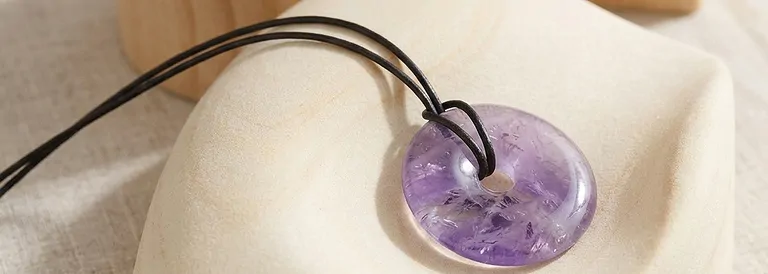
The Significance of Amethyst in Crystal Healing
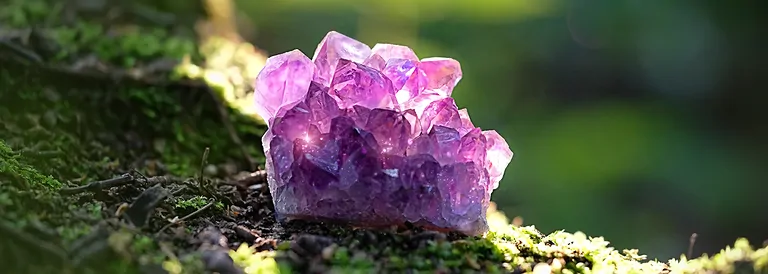
Hildegard of Bingen and Amethyst
The Benedictine nun, naturalist, and mystic Hildegard of Bingen (1098–1179) mentioned amethyst in her writings on natural healing, particularly in her work *Physica*. As with many gemstones, she attributed special effects on the body and mind to this mineral.
According to Hildegard, amethyst was considered the stone of:
- inner peace
- purity
- prudence
- mental clarity
It was believed to help dispel negative thoughts and lead people to a state of inner balance.
Konrad von Megenberg and the Amethyst
The medieval scholar Konrad von Megenberg (1309–1374) mentioned amethyst in his famous work on natural history, *The Book of Nature*, one of the first comprehensive natural history books written in German.
Like many scholars of the Middle Ages, Konrad adopted ancient ideas about the meaning and effects of gemstones. He regarded the purple mineral as a stone of prudence and mental clarity. He particularly emphasized that the stone was said to protect against drunkenness and encourage people to think rationally. He wrote about the violet gemstone: “Amethyst dispels evil thoughts and brings sound judgment.”
Wholesale Amethyst Wellness and Gift Items
In the medieval worldview, gemstones were believed to possess special powers. Their colors, luster, and rarity were seen as expressions of a divine order in nature. The violet amethyst, in particular, symbolized:
- Moderation
- Wisdom
- Spiritual purity
- Inner order
Amethyst in Modern Crystal Healing
Amethyst promotes mental alertness and a sense of the mystical aspects of our lives. With its support, we can view ourselves and others with sincerity and honesty, and face even unpleasant realizations. Unresolved impressions become clear, and inner peace sets in—strengthened in this way, we can shape the future constructively.
This violet quartz mineral awakens and supports a sense of spirituality. Judgment and a sense of justice can be strengthened, allowing honesty and sincerity to flourish. Unresolved issues come to the surface and can be actively addressed; inspiration and intuition are sharpened, and focused thinking and action are supported.
In this way, even unpleasant feelings can be processed effectively. The gemstone’s clarifying, purifying energy helps foster greater (self-)awareness. A conciliatory attitude toward oneself and one’s surroundings becomes possible.
Tumbled Stones, druses, jewelry, and other items at wholesale prices
Cleansing with Amethyst
Amethyst encourages one to let go of “attachments.” You can experience this directly as the violet quartz helps you release negative influences to find inner peace. It can support you in letting go of old habits and finding greater inner freedom and self-determination.
The Effect of Amethyst on People
Its “cleansing message” is: “End attachment and free yourself from everything that clings to you!” This applies both to oneself—when one clings too tightly to something—and to everything that binds itself too tightly to us. Amethyst brings liberation and is therefore highly valued in the monastic orders of many religions. It is no coincidence that it also adorns the rings of Catholic bishops.
Effects on Animals, Plants, and Stones
Amethyst also works on animals, plants, and even stones: it is precisely this information that enables the violet mineral to free all kinds of other gemstones from clinging external information. Because it dissolves the “attachment” itself, it does not matter what kind of foreign information or which stone is involved.
Practical Use
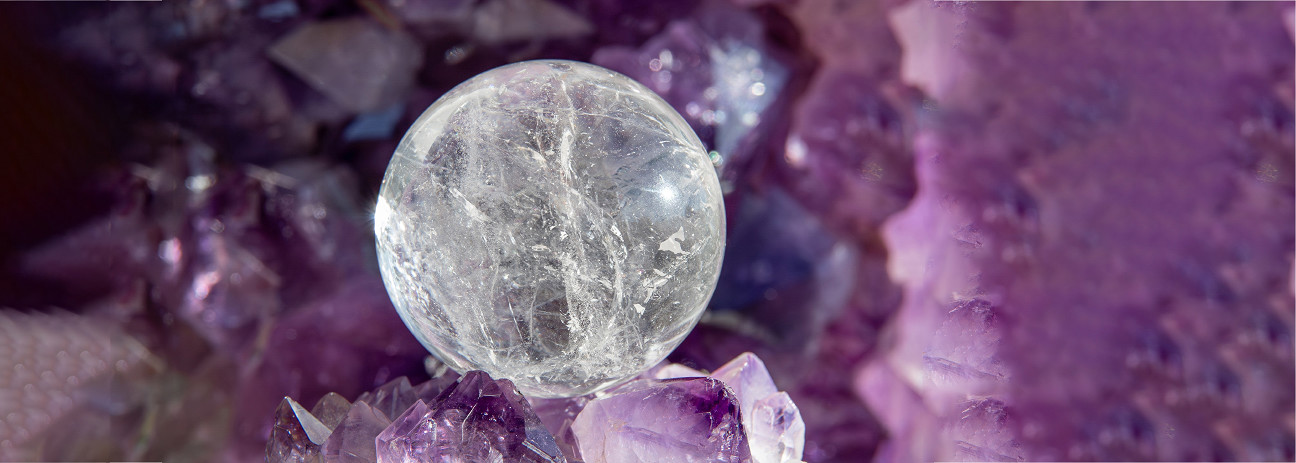
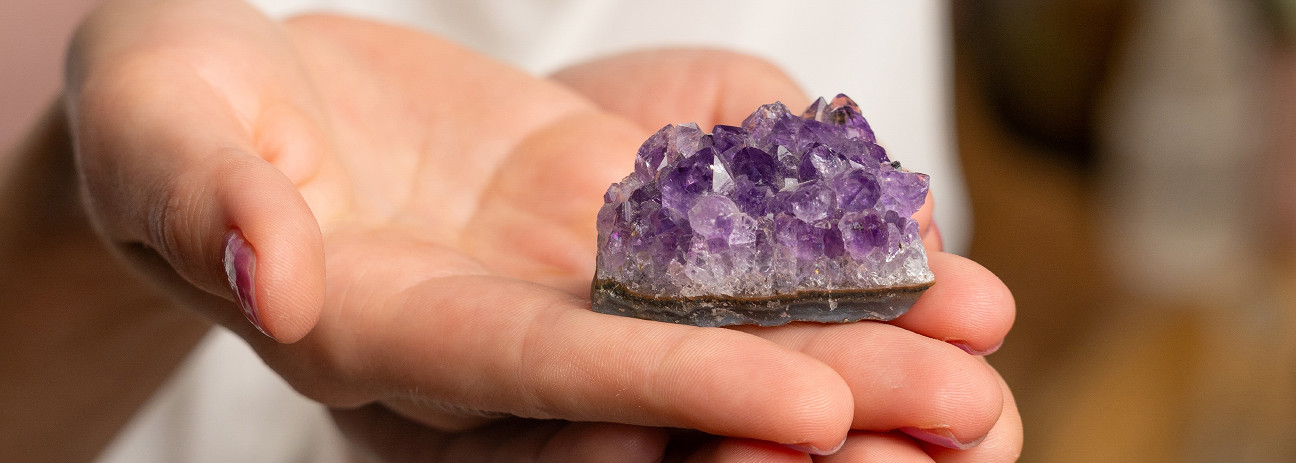
To cleanse them, simply place the stones in question on an amethyst geode or a piece of amethyst geode. The energy radiating from the crystal tips permeates the stones resting on them with the aforementioned “cleansing information,” thereby dissolving all foreign information.
If the stones have been discharged under running water beforehand, two to three hours are sufficient. If that is not possible (e.g., with stone necklaces), eight to twelve hours is the minimum required. It can also be longer—there is no such thing as “too much” here!
The most important things to know about cleansing with amethyst:
• Timing: Before using a stone for the first time, as well as always after taking it off—or whenever you feel it’s necessary!
• Duration: Two to three hours after prior discharge; otherwise, eight to twelve hours—feel free to leave them in longer.
• Suitable for all stones except Amber
More info and tips on cleansing and discharging gemstones
Amethyst in Gemstone Astrology
In astrology, amethyst is known as a stone that promotes clear thinking, sound judgment, and efficiency in those born under Virgo, and patience in those born under Aries.
In the Native American Medicine Wheel, the purple quartz is the totem of the Brown Bear Moon (Virgo).
Amethyst as a Chakra Stone
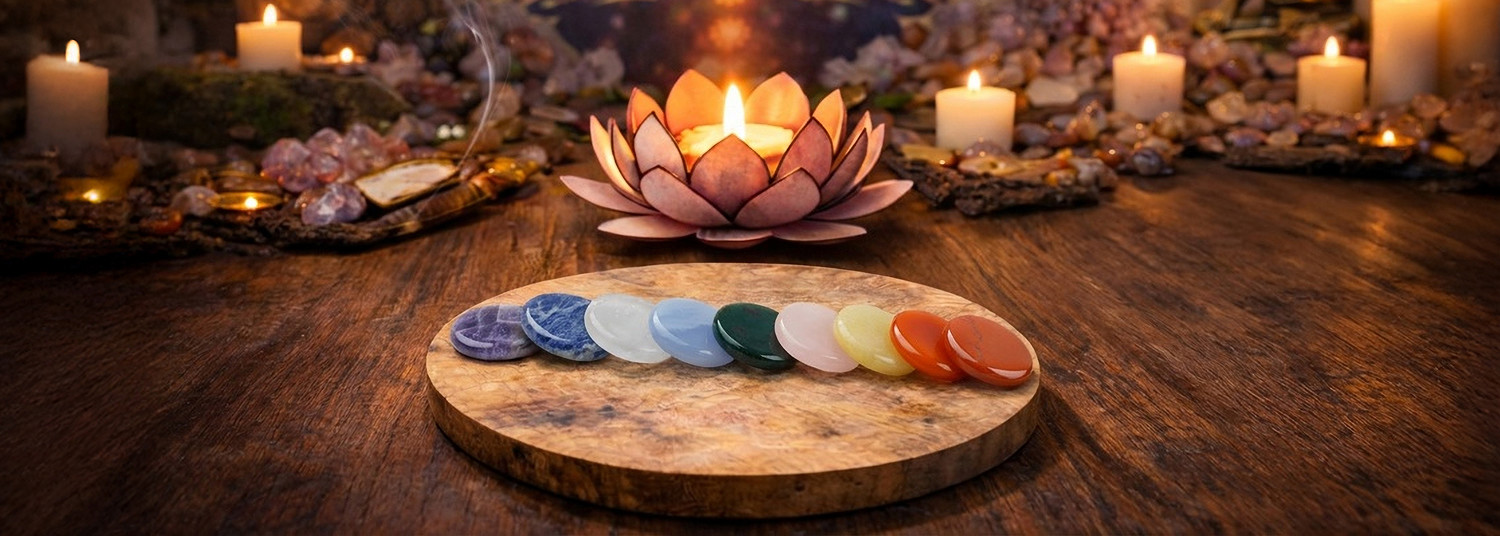
Amethyst is traditionally associated with the crown chakra—the energy center for consciousness, inspiration, and mental clarity. The crown chakra is located at the highest point of the head and symbolizes insight, spirituality, and the connection to one’s own inner path.
Sometimes, in the hustle and bustle of everyday life, our wishes, ideas, and longings get lost—amethyst reminds us to listen to our inner voice again and make room for our own life’s dream.
All About Chakras and Gemstones
The Formation of Amethyst
Amethyst is the violet variety of the mineral quartz and undergoes formation over millions of years under specific geological conditions:
-
Formation of Cavities
In volcanic rocks such as basalt, gas bubbles contribute to the formation of cavities known as druses or geodes.
-
Infiltration of Mineral-Rich Solutions
Hot water rich in dissolved silicic acid (SiO₂) flows through these cavities. As it cools slowly, the silicic acid precipitates on the walls, forming quartz crystals.
-
The violet color is formed
-
Slow crystal growth
Over very long periods of time, the crystals grow layer by layer. Depending on the concentration of trace elements and the growth conditions, different shades of color form—ranging from delicate lilac to deep purple.
Varieties and mineralogical relatives of amethyst
Amethyst belongs to the quartz mineral group and is its best-known purple variety. Within the quartz family, there are numerous varieties that differ primarily in their color and the trace elements they contain.
One of the best-known relatives is Citrine, whose yellow to golden-brown color is due to iron. When amethyst is heated to about 400–500 °C, its color can change. The formation often results in yellow to orange stones that are sold as Citrine. A large portion of the Citrine available on the market is therefore heated amethyst.
In nature, crystals are also found that display both violet and yellow areas. This two-colored variety is called Ametrine and is particularly well known from Bolivia.
Another closely related variety of quartz is Rose Quartz, which usually owes its delicate pink color to microscopically fine inclusions. Smoky Quartz, on the other hand, exhibits brown to gray-brown hues caused by natural radioactive radiation. The colorless member of the quartz group is called Rock Crystal and is considered the purest form of the mineral.
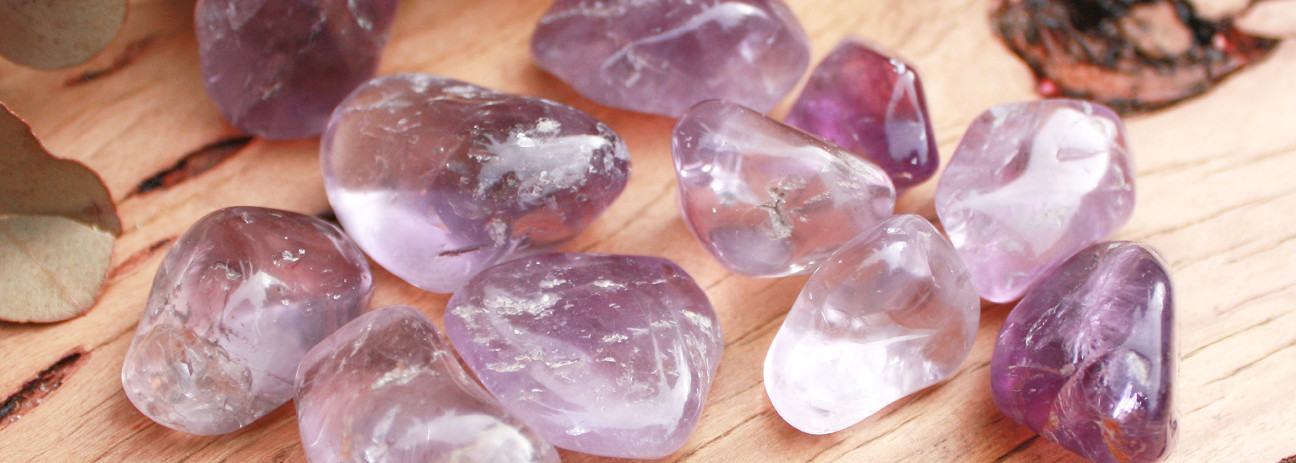
Localities for Amethyst
Amethyst is one of the world’s most widely distributed gemstones and collector’s minerals and is found on every continent. The diversity of its global localities is reflected in the variety of colors, crystal shapes, and qualities. Depending on their origin, these gemstones can range from delicate lilac tones to deep purple and are prized both as gemstones and as impressive collector’s items.
Brazil is among the most significant producing countries and has been considered one of the most important suppliers for decades. The states of Rio Grande do Sul, Minas Gerais, and Bahia, in particular, are known for their massive amethyst druses. The crystals found there range from light violet to intense dark violet hues and can reach impressive sizes.
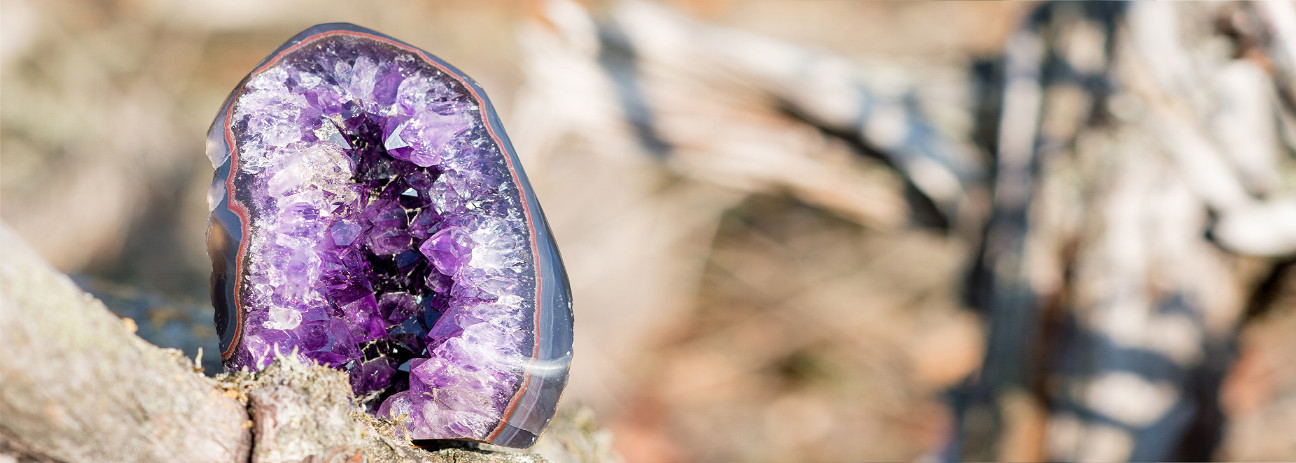
Uruguay is also of great economic importance. The deposits in the Artigas region frequently yield particularly vivid crystals with a deep violet color. Amethysts from Uruguay are prized by collectors and jewelry makers alike for their rich color and high luster.
An exceptional locality is located in Zambia. The gemstones mined there are often characterized by an intense violet to slightly bluish color and are considered some of the highest-quality gem-quality amethysts in the world. Other significant localities are found in Bolivia, Mexico, Canada, the United States, Russia, India, Madagascar, and Namibia.

Amethyst holds a special official status in the U.S. state of South Carolina, where it has been designated the official state gemstone since 1969. The designation was made due to significant amethyst localities in the state and the historical importance of its localities.
Amethyst is also found in Europe. Major deposits are located in Germany, Austria, France, and the Czech Republic, among other places. In Germany, the amethyst deposits in the Saar-Nahe region, the Palatinate, and the Black Forest are particularly well known. Although the crystals found there usually do not reach the size of South American specimens, they possess high mineralogical and collector’s value.
The amethysts found in the Ore Mountains were even featured on a postage stamp in the GDR in 1972 and 1974. The violet mineral has also appeared on postage stamps in other countries, such as Austria, Switzerland, Kenya, and Israel.
Wholesale Amethyst Jewelry and More
Possible Confusions with Amethyst
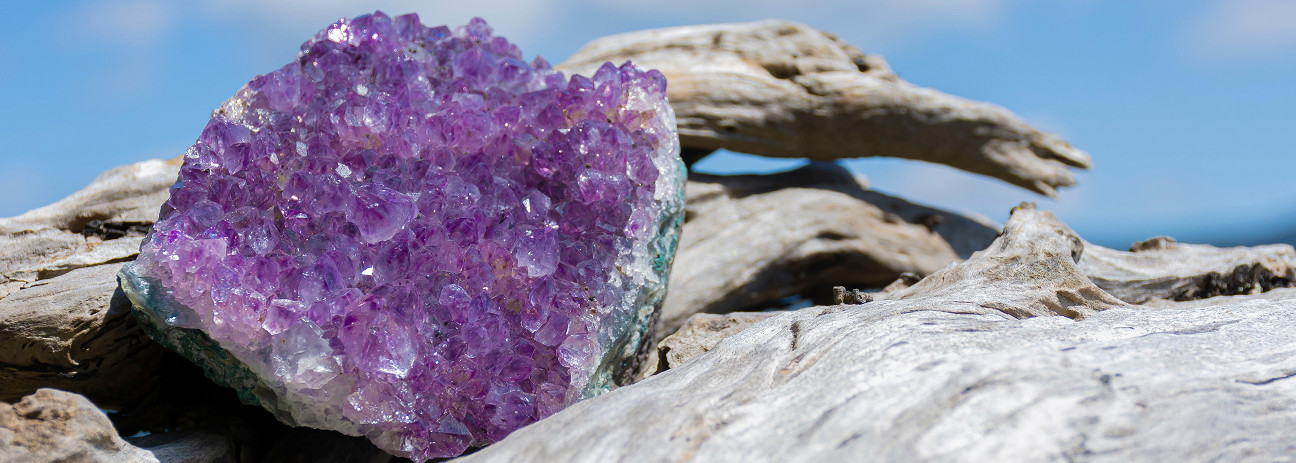
Thanks to its characteristic violet color, amethyst is usually easy to recognize. Nevertheless, especially when cut as a gemstone, it can be confused with various other minerals and gemstones. For a reliable identification, properties such as hardness, luster, crystal shape, and optical behavior are important in addition to color.
One of the most common cases of confusion is with fluorite. Violet fluorite can look very similar in color to amethyst, but it is significantly softer. While amethyst has a Mohs hardness of 7, fluorite reaches only a hardness of 4 and can therefore be scratched much more easily.
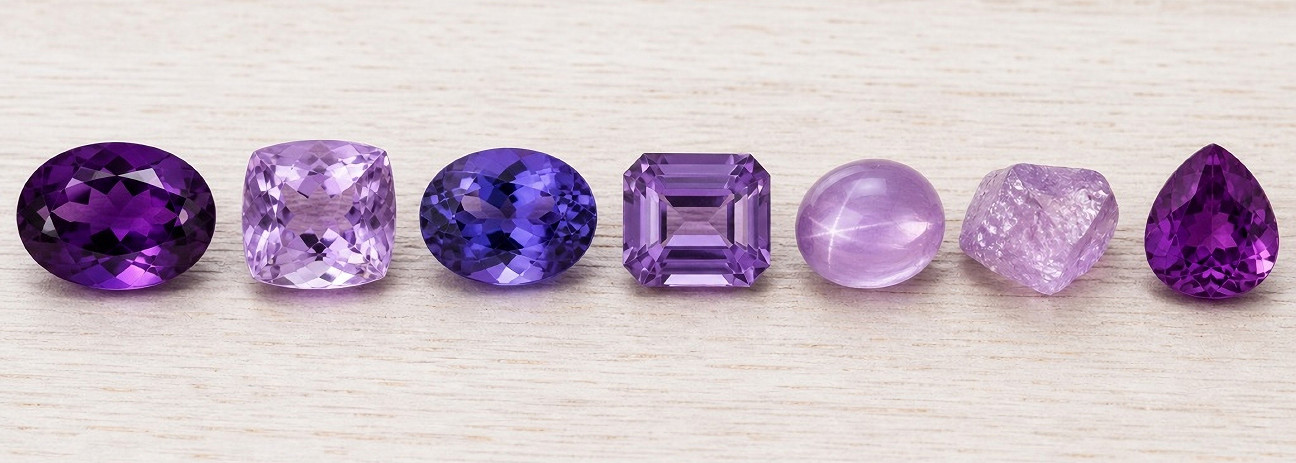
Kunzite, the pink-violet variety of the mineral spodumene, is also occasionally mistaken for amethyst. However, kunzite often exhibits stronger pleochroism, meaning that its color changes much more noticeably depending on the viewing angle than amethyst does.
In the gemstone trade, violet sapphires and Spinels can also exhibit similar shades. However, both minerals have different optical and physical properties and are usually much rarer (and thus more expensive) than amethyst.
In the case of collector’s pieces and rough crystals, amethyst can also be confused with violet apatite, Scapolite, or, rarely, with violet varieties of garnet. However, the different crystal forms as well as the varying hardness and density values usually allow for unambiguous identification.
In addition to natural minerals, artificially dyed quartz or glass imitations designed to resemble amethyst are occasionally found on the market. Such imitations often exhibit an unnaturally uniform color distribution or contain characteristic inclusions and structures that do not occur in natural amethyst.
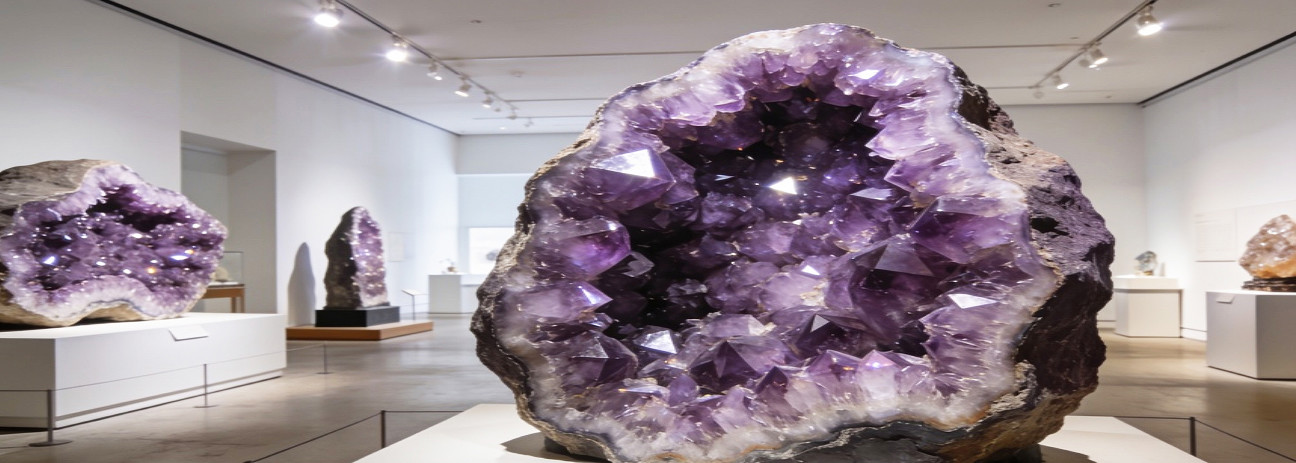
Notable Amethysts in Museums
Numerous natural history museums and mineral collections around the world showcase exceptional amethyst specimens, druses, and geodes. Some of these exhibits are among the most spectacular mineral finds of all time and attract thousands of visitors every year.
The Amethyst Geodes at the American Museum of Natural History (New York, USA)
Among the most famous exhibits are the giant amethyst geodes in the Mignone Halls of Gems and Minerals at the American Museum of Natural History in New York. The geodes, which can be up to several meters tall, originate from Uruguay and were formed approximately 135 million years ago in volcanic cavities. They are among the largest publicly displayed amethyst geodes in the world.
Amethyst Geodes at the Smithsonian National Museum of Natural History (Washington, D.C., USA)
The Smithsonian houses one of the world’s most significant mineralogical collections. Among the items on display are high-quality amethyst geodes and crystal clusters from Brazil, which impressively document the diversity of the quartz family. The collection includes numerous international masterpieces and is considered one of the most important reference collections for mineralogists.
The “Empress of Uruguay”
The “Empress of Uruguay” is considered the largest known amethyst geode in the world. The specimen, which is approximately 3.3 meters tall and weighs about 2.5 metric tons, was discovered in 2007 in the Artigas Department of Uruguay. The geode has already been on display at several renowned museums and special exhibitions, including the American Museum of Natural History. Today, it is on permanent display in Australia.
Natural History Museum Vienna (Austria)
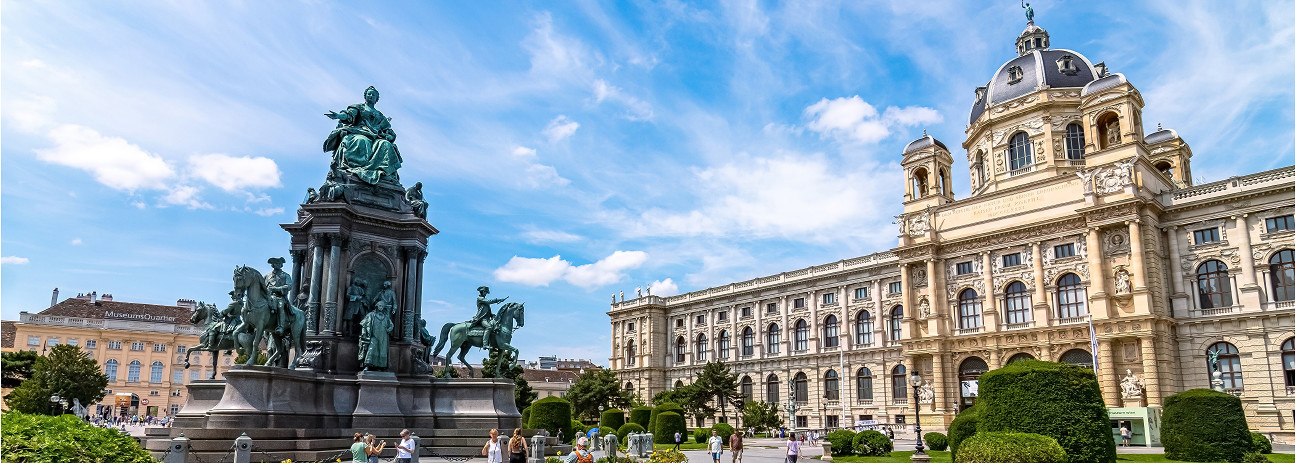
The Natural History Museum Vienna houses one of Europe’s most significant mineral collections. Particularly well-known is an amethyst specimen weighing about 450 kilograms from Brazil’s Serra do Mar, which ranks among the most impressive exhibits in the mineralogical collection.
Amethyst Items for Museum Shops